
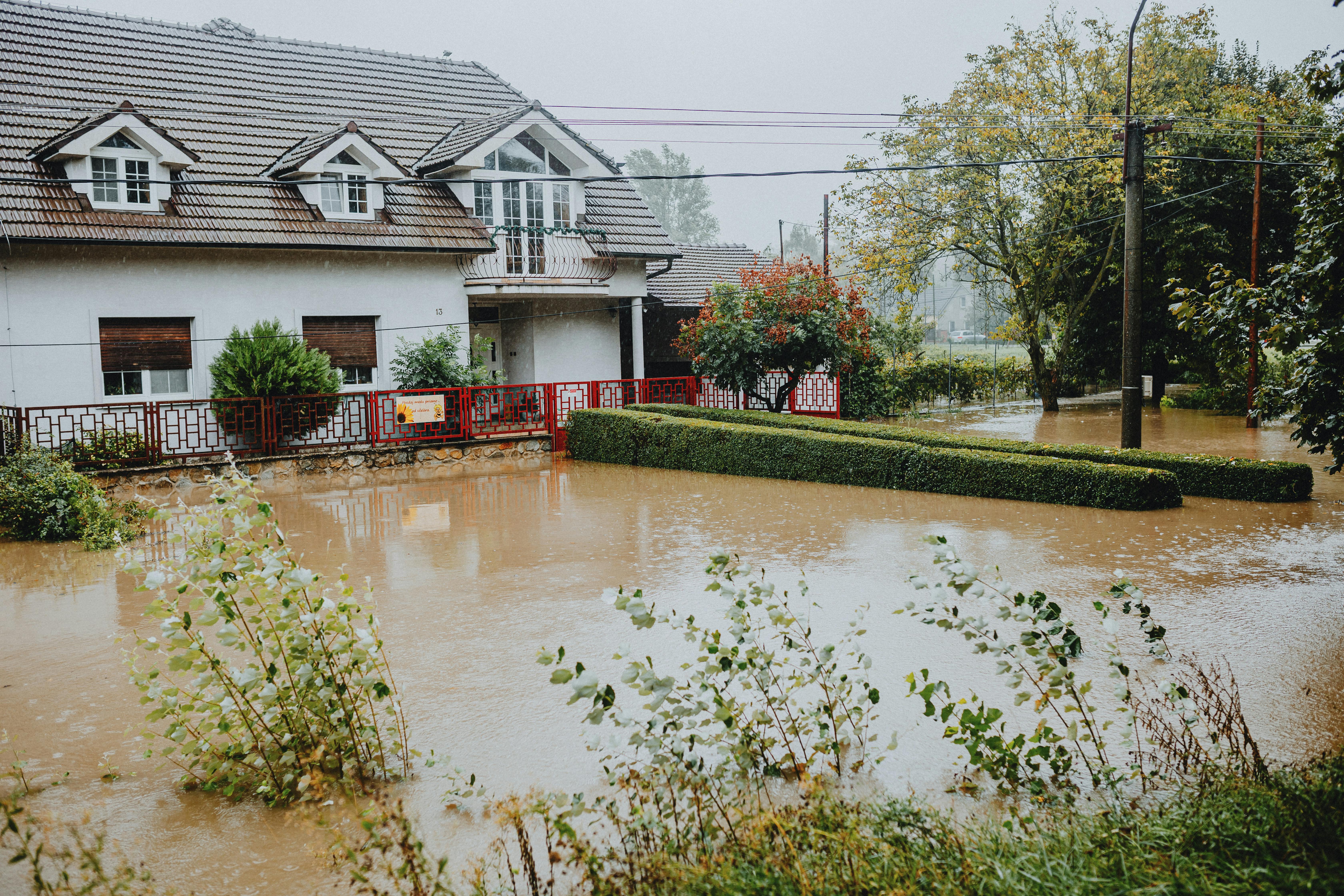
Home premiums in some regions have risen faster than local claim experience explains. A large part of that increase originates in the market where insurers buy their own protection.
Insurers insure themselves
A regional insurer holding thousands of policies in one storm path faces the possibility that a single event damages all of them at the same moment.
Reinsurance transfers the top layer of that exposure to a global market in exchange for a premium paid every year, event or no event.
Without it, an insurer would need to hold far more capital against the same book, or write far fewer policies in exposed areas.
The reinsurance premium is a fixed input to the primary insurer's costs, sitting alongside claims and expenses in every year's accounts whether or not a storm arrives.
Reinsurance is priced on capital, not on last year
Reinsurers commit capital against a possible catastrophe and price that commitment against the return the same capital could earn elsewhere.
When large losses consume capital, or when investors demand higher returns, the cost of the commitment rises across the entire market at once.
The increase reaches regions that had a quiet year as well, because the capital backing them is shared across all of them.
Catastrophe models set the expected loss
Reinsurers price from models that simulate large numbers of possible storm and wildfire seasons against the specific exposure they are covering.
Revisions to those models, whether for changed hazard assumptions or better property data, can move prices without any actual event having occurred.
A model update is often the reason a rate change arrives in a year when nothing happened locally.
Because the models are proprietary, two reinsurers can reach different views of the same portfolio, which is part of why quoted terms vary between them.
The cost passes into primary rates
Reinsurance is a cost of doing business for the primary insurer, and it enters the rate filings submitted to state regulators for approval.
Where regulators restrain increases, insurers reduce exposure instead, through non-renewals, tighter underwriting rules or withdrawal from a region altogether.
Availability and price are linked for that reason, and pressure suppressed in one tends to appear in the other.
An insurer unable to recover its reinsurance cost within an approved rate has little reason to keep writing new business in that market.
Alternative capital changes the cycle
Catastrophe bonds and similar instruments bring investors directly into the risk, expanding capacity whenever the returns on offer look attractive.
That capital arrives and departs faster than traditional reinsurance, which shortens the cycle between expensive and cheap market conditions.
Homeowners experience the result as sharp increases followed by longer stretches of stability, driven by conditions far away from their own roof.